
Is Your IAM Program Ready for What's Next?
A national insurance provider with about 2,000 employees was running identity on scattered point tools with no plan tying them together. Here's how Loom Security and CINQUE built a role model from how its people really work, and why the insurer kept CINQUE after the project ended.
Customer name withheld at the customer's request.
Nobody could explain who had access to what, or why
Picture the identity team at a national insurer. Corporate staff, clinical roles, and a field force, spread across several lines of business. Every group needs different access. Every regulator wants to know why.
And the tools? A handful of point products, each doing one job. None of them talking to each other. No role model connecting a job to the access it should have.
So every access request turned into a judgment call.
- No persona or role model to match identity to real access needs
- Point tools with no framework tying them together
- Several lines of business and customer segments, each with different access rules
- No way to show leadership the return on identity spending
What it was costing them
- Auditors and regulators asking harder identity questions every year
- Access gaps that put member and patient data at risk
- A manual, inconsistent decision on every access request
- No way to choose the right tools without a framework first
- A team that couldn't mature the program with nothing to build on
Another tool wouldn't have fixed any of that. The missing piece was a clear picture of how the company really works.
Start with how people work. Build the roles from there.
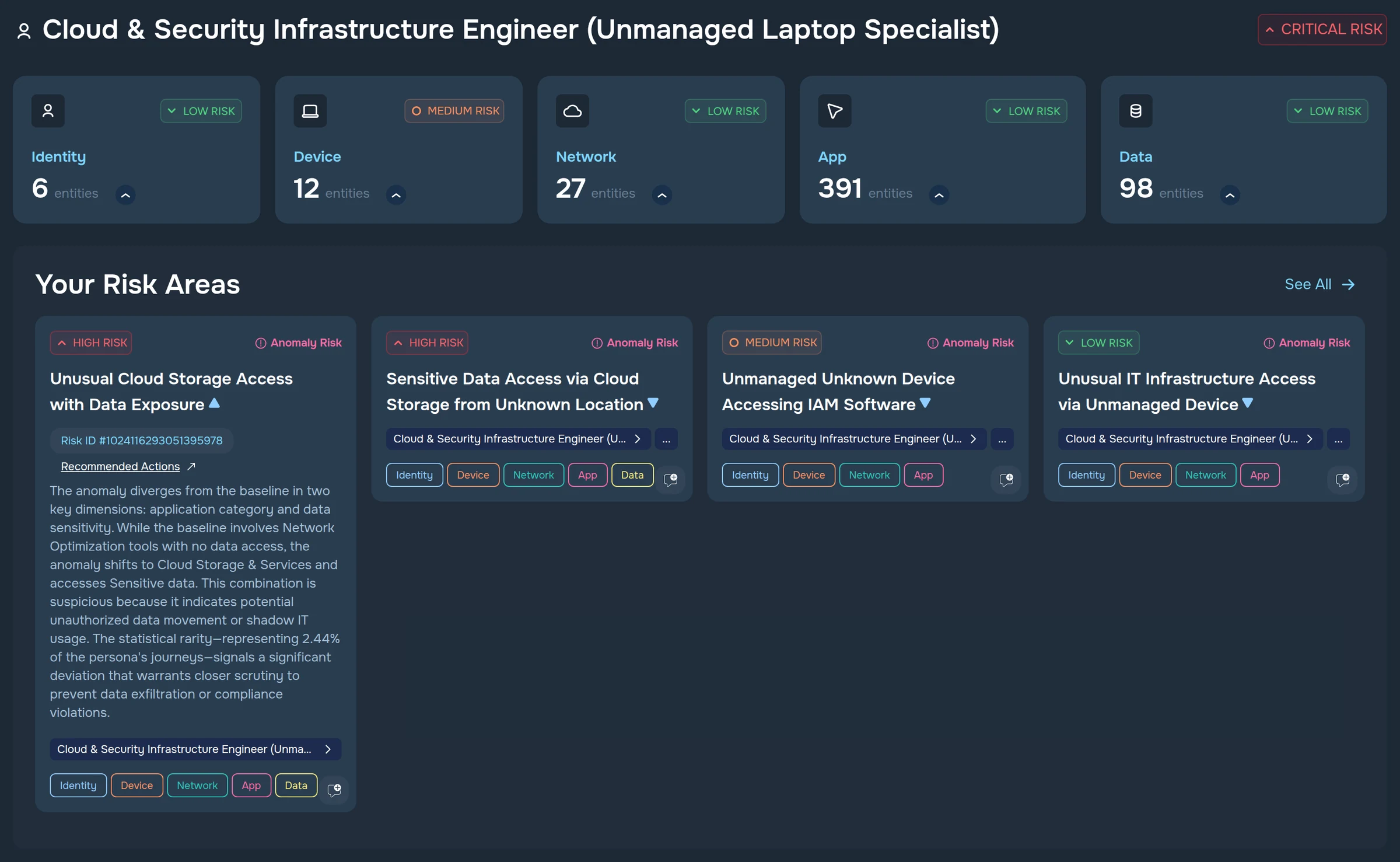
Loom Security embedded with the insurer's identity and IT teams as an extension of their staff. CINQUE's persona engine read real user behavior and grouped people by what they do, what they need to reach, and how much risk comes with it. Those personas became the base for everything that followed.
Persona discovery and prioritization
Business personas identified by function, access needs, and risk, using CINQUE behavioral data.
Identity role framework
A core role structure defined for each persona, ready for policy and governance.
Data mapping and tool rationalization
Persona data mapped to existing systems, with real use cases to guide which platforms to keep.
Ongoing platform management
CINQUE kept as the identity platform of record for continuous governance and access reviews.
A project that turned into the platform of record
Here's the part most teams miss. The framework came first, and the tool decisions got easier because of it. When you can see how your people really work, the right roles stop being a guess.
Find out what your own personas look like
Send one export from your identity provider. In a Persona Discovery Workshop, our team walks you through the personas CINQUE finds, and the people, service accounts, and AI agents that don't fit.